Allowing students to talk about their culture in the classroom is a great opportunity to for them to share a part of themselves with other students and their teachers. It also helps students recognize and respect differences and learn about their host culture. This great activity by Ann Flood in her book English Teacher Training Manual, soon to be released on Amazon, is a fun and different way to get students actively involved in talking about something we all love doing: eating!
Objective: Participants will exchange table manners and customs for both the USA and the host country.
Materials:
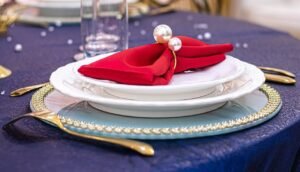
- Table settings, (plastic or paper is fine to use as a demonstration setting. If no table settings are available, create table settings out of paper.)
- Any snack food can be used to demonstrate eating at the table, so choose something everyone will like.
- A piece of paper prepared for each group.
- Poster paper
Before the lesson:
- Choose one or two participants to prepare their own table setting to demonstrate their table manners. Let everyone know the day before what you will be doing so they all can be prepared to share. In every group, you will need an American and a native table setting. You can either set one for each person or just use one as a demonstration.
- Divide an 8.5×11 piece of paper into four sections. Put one question at the top of each section. Put a question sheet in the middle of each group.
- Why are manners important?
- What is the most important rule in your culture?
- Who teaches you manners?
- When should you use good table manners?
Note: This lesson will allow attendees to use language as they explain their own cultural norms. If the group’s language level is low, it might be a good idea to create a vocabulary list so that attendees can practice words during language classes.
Procedure:
- As the group arrives, allow them to spend a few minutes answering the questions of the sheet in the center of each group. Inform them that there is more than one answer to each question.
- After a few minutes ask for volunteers from each group to shout out answers for each question. Note the similarities and differences between the two cultures. Explain to the group that today we will look at eating and manners. These are a part of every culture and since different cultures have different rules, it is easy to make mistakes. Then people will think you are rude, when you are actually ignorant.
- Take turns explaining how a table is set in each culture. Go over basic manners. Allow time for dialogue in each group. Remind leaders to use simple language and explain new vocabulary as they go along. Make a list of unfamiliar words. While waiting for all groups to finish, practice table manners together. It is possible to have a lot of fun with this by demonstrating BAD manners.
- Large group activity: After all groups have finished explaining table manners, bring everyone together. On a large piece of paper, place two columns labeled same, different. Brainstorm manners that are in both cultures and manners that are only in one culture.
- Closing: Even though cultures are different, people like to get together and eat as a way to get to know each other better. This is true in every culture. Practice getting to know your friends better as you share meals together.